
Foreigners
Outline of Research
“Development of technology for environmental conservation, restoration, and sustainable utilization of energy and resource using the abilities of living organisms”
Our laboratory focuses on environmental conservation and purification systems as well as recovery of energy and resources using the abilities of microorganisms and plants. It is believed the core reason of environmental, resources and energy problems are rooted in anthropogenic activities which disrupt the flow of energy and materials of this planet. The concept of our lab is to solve these environmental problems by using the power of nature: the power of organisms and ecosystems. Biological technologies has the advantages of low cost, low energy and resource saving as well as high environmental adaptability and is one of the best choices for an environmental technology. Because we are dealing with organisms as reusable resources, we are able to develop a co-benefit process where environmental conservation and purification is linked to material production. Our lab utilizes such a wide variety of techniques to address these environmental problems that we are frequently called a “supermarket of environmental techniques.”
Research Topics
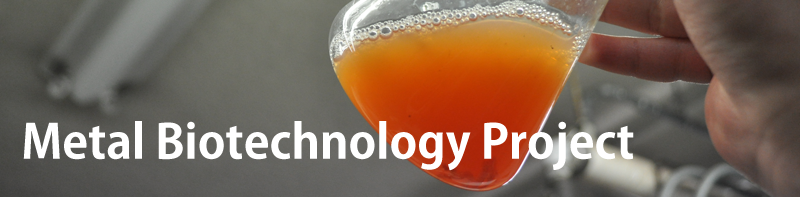
While rare metals are one of the important resources supporting modern technology, many of them are known to be harmful substances in the environment. In order to realize a true environment-friendly society, it is necessary to realize resource security and environmental conservation with energy and cost savings. In the metal biotechnology project, we are focusing on biotechnological resource recovery and environmental protection technology, focusing on the diverse metal metabolism capabilities of organisms and the economics and environmental harmony of biological reactions.
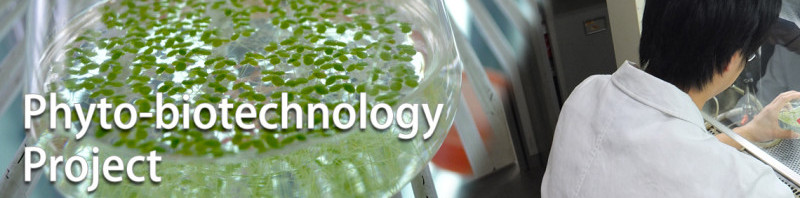
Plant, as a device for the development of environmental conservation and purification technology, has the characteristic named as the environmental compatibility, including high economic efficiency and energy conservation. In our laboratory, we focus on the potential of plant growth promotion and decomposition / removal of chemical substances and study about the enhancement of the vegetation purification method, through the interaction between plants and microorganisms in the plant rhizosphere.
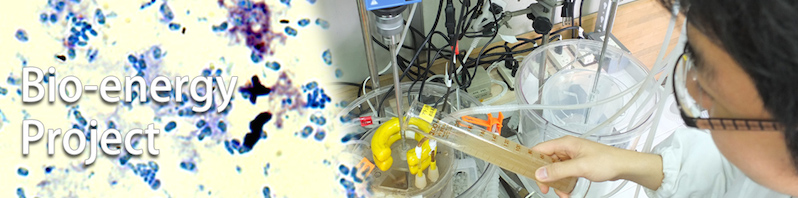
Currently, there is a need to create a recycling-oriented society, and there is also a need for saving and creating energy in water treatment systems. Therefore, in our research team, we aim to establish a system that converts organic matter in the waste water into a material with high resource value, by using excess sludge, which has conventionally been regarded as waste, as a catalyst. We are conducting research aimed at improving the efficiency of the entire flow involved in resource production, such as “accumulation of microorganisms”, “accumulation of intracellular storage materials”, and “extraction of accumulated materials” in sludge.
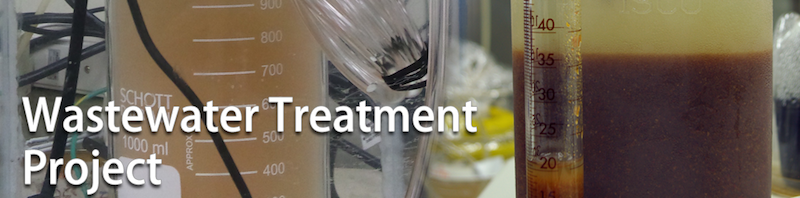
With the diversification of wastewater and the strengthening of regulations, we aim to develop and popularize higher wastewater treatment technologies. The research team focuses on 1,4-dioxane substances that are considered to be problematic due to carcinogenicity, hydrophilicity, and decomposability to establish new treatments and their decomposing bacteria, and tries to establish a new and efficient technology.
Location
Our lab is located in the northern part of Osaka prefecture of western Japan.
〒565-0871 Osaka-fu, Suita-shi, Yamadaoka2-1 M3-518
Access to Osaka University Suita campus
For more information, please contact us.
・内容の更新
・少なくともHOMEの内容は英語化する(先生の紹介など)
・個別の研究テーマ
・学会参加、雰囲気の紹介(モザイクかけて写真とか?)
・アクセスをもうちょい詳しく